
We know skin psoriasis can cause discomfort and affect your overall quality of life. We will help find the best treatments that can alleviate your symptoms and actively manage your psoriasis.
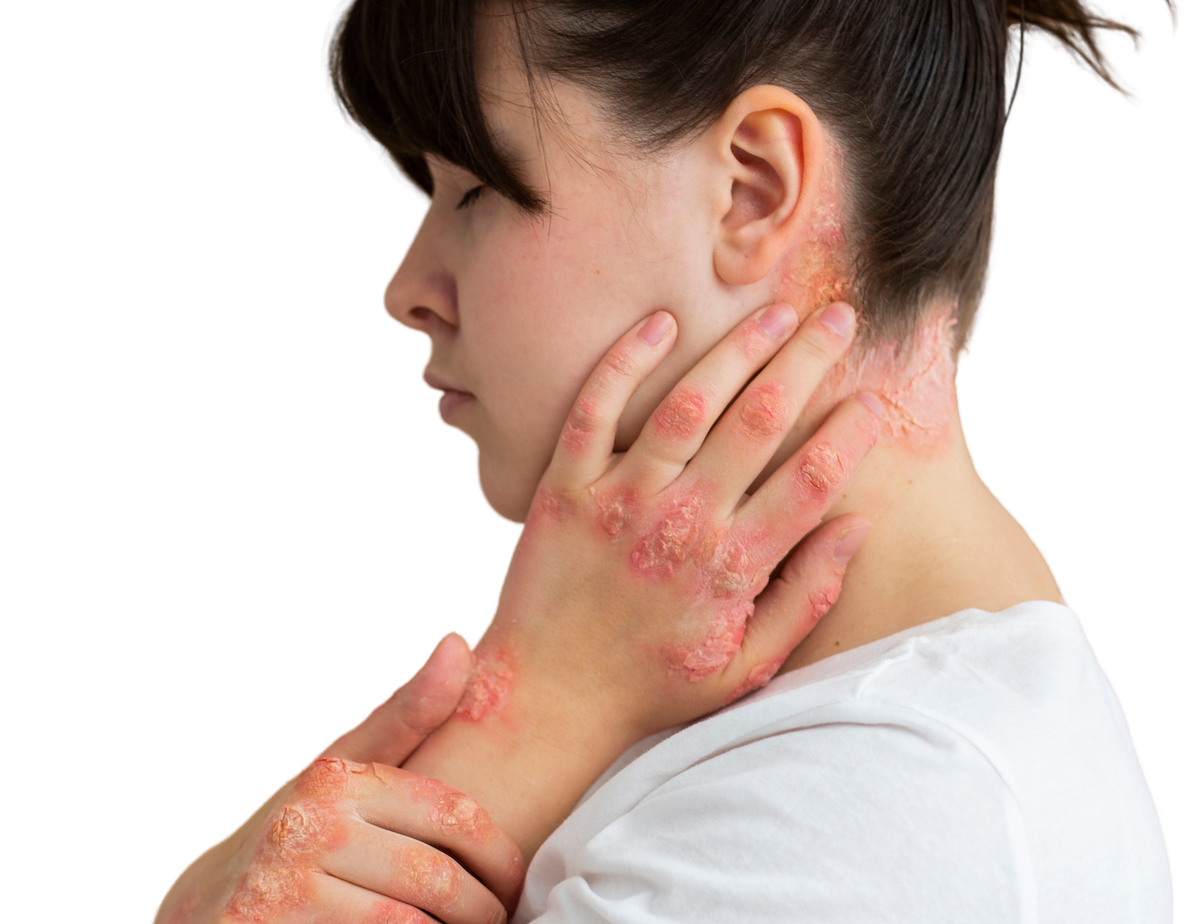
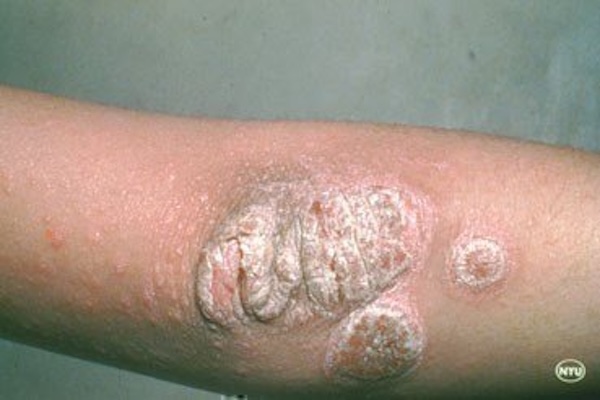
Psoriasis is a disease that affects skin cells. This disease develops when the immune system sends the wrong signals to the skin cells, telling them to grow faster. So instead of new skin cells taking weeks to form, it takes days. Instead of shedding the new skin cells, the body holds on to them. This causes the skin cells to accumulate on the skin surface. These patches of unshed skin cells are psoriasis. While it may look contagious, it isn’t, so it can not be transferred through touch. Instead, it is inherited.

Diagnosis
If necessary, our dermatologists will remove some skin. They will then take the skin and put it under a microscope, confirming the diagnosis.
Treatment
There are many effective treatments available and they can greatly improve symptoms and overall quality of life. In some cases, treatment may even clear the skin completely. Thanks to ongoing research, patients today have more options than ever before.
Because each treatment comes with its own benefits and possible side effects, it’s important to consult a dermatologist. While there is currently no cure, the condition can be managed long term. With the right treatment plan, you can reduce flare-ups, ease daily discomfort, and maintain healthier skin. Actively managing the disease allows you to stay in control and improve your day-to-day life.


We will review your symptoms, medical history, and triggers, followed by a skin exam to confirm your diagnosis.

We don’t believe in one-size-fits-all care. Instead, we’ll create a personalized plan for your needs, goals, and lifestyle.

We’ll monitor your progress, adjust treatments as needed, and guide you in preventing flare-ups for long-term skin health.

We examine the skin, nails, and scalp and talk about family history of the disease. We discuss stressors, illnesses, and/or new medications. We may need to remove some skin to exam under a microscope and confirm the diagnosis.

We discuss treatment options that fits your lifestyle. We want to reduce your symptoms and make a difference in the quality of your life.
If you have psoriasis and you're experiencing joint pains that you are not sure about, it's a great idea to see a rheumatologist and get checked.
Who gets psoriasis?
Psoriasis affects about 7.5 million people in the U.S. It can occur at any age but is most common between ages 15–30 and 50–60. Caucasians are more likely to develop it. If psoriasis appears in children, it’s often inverse or guttate psoriasis. Family history plays a role, but having a relative with psoriasis doesn’t guarantee you will get it.
What causes psoriasis?
Psoriasis is not contagious. You can’t catch it from swimming, touching, or sexual contact. Scientists know it involves an interaction between a person’s genes and immune system. Even with genetic risk, psoriasis usually develops only when combined with certain triggers such as stress, strep throat, some medications (like lithium or malaria prevention drugs), skin injury, or cold/dry weather.
What are common symptoms of psoriasis?
Psoriasis causes thick, red, scaly patches of skin that may itch, burn, or crack. It can also affect the scalp, nails, and joints. Some people develop psoriatic arthritis, leading to joint stiffness or pain. Symptoms can range from mild to severe and may come and go in cycles.
How do dermatologists diagnose psoriasis?
A dermatologist will:
How is psoriasis treated?
There is no cure, but treatments can improve quality of life and may clear the skin. Options include:
What is the long-term outlook?
Psoriasis is a lifelong condition, but active management can ease symptoms, prevent flare-ups, and protect your overall health. Working with a dermatologist helps keep the disease under control.
How can I manage psoriasis day-to-day?
What should I watch for with my joints and nails?
Around 10–30% of patients develop psoriatic arthritis, which can cause joint stiffness, pain, or swelling. Nail changes like pitting, ridges, discoloration, or lifting from the nail bed may also signal psoriatic arthritis. Early treatment helps prevent joint damage.
Can psoriasis affect my mental health?
Yes. Many people with psoriasis experience depression, anxiety, or low self-esteem. If you feel overwhelmed, speak with a mental health professional or join a support group. Seeking help is a sign of strength, not weakness.
How do I use topical psoriasis medication correctly?
Dermatologists use the “fingertip unit” method to guide dosage. One fingertip unit is the amount of medicine squeezed from a tube along an adult fingertip. Different body areas require different amounts—for example, the scalp may need 3 units, while an elbow might only need 1. Always follow your dermatologist’s instructions.
"Dr. Alvarez is a conscientious and compassionate physician. My family and I have been seeing him for 8+ years and I’ve referred him to family and friends alike.
Everyone is always pleased with the referral and the care they receive."
- V.R.

"Dr. Alvarez is incredible - by far my favorite doctor. He has helped me with a multitude of issues - advocating to my insurance for necessary care and offering me options for everything.
He and his team are dedicated to giving excellent, welcoming, quality care - and they have great views from their office."
- B.G.
"I've been trying to find a great dermatologist for a very long time. Dr. Alvarez was efficient, smart, kind and everything you would want to treat a skin condition that I was challenged with on my thumb. I will be recommending him to everyone!"
- P.H.