
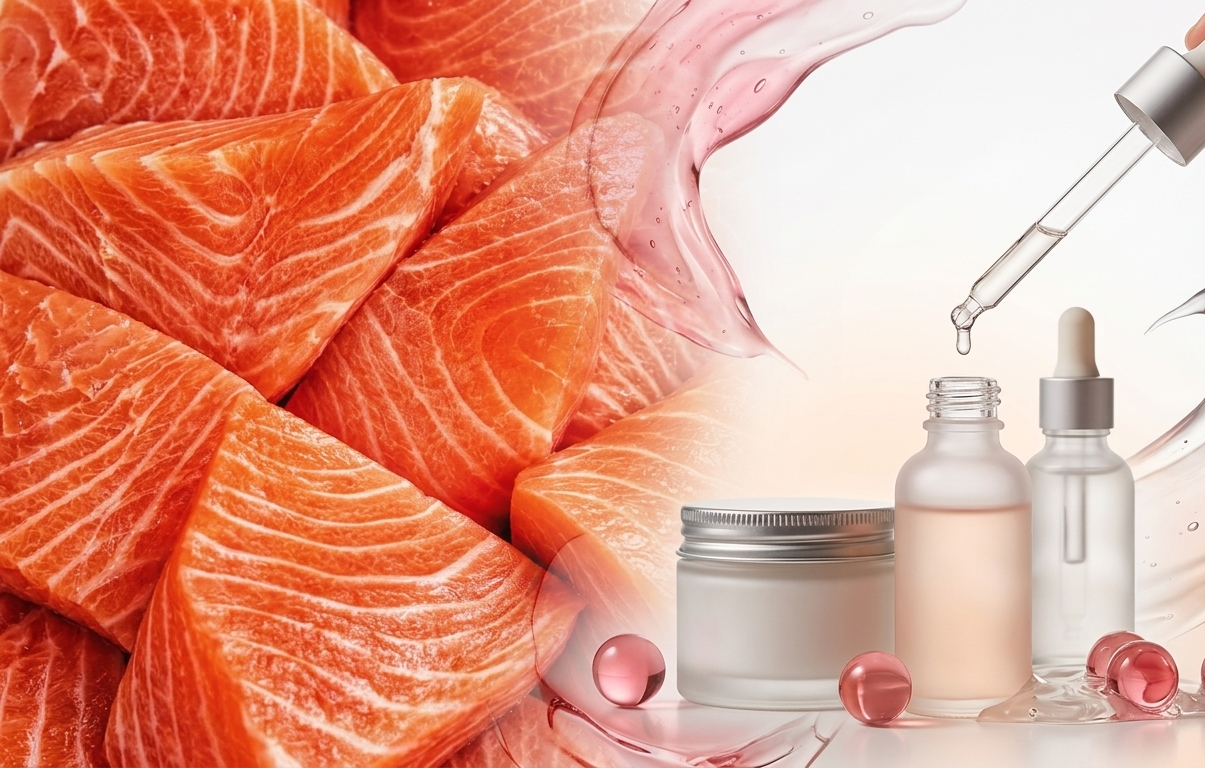
If you have seen it on TikTok or heard it described as the salmon sperm facial, you probably had one of two reactions: curiosity or a hard pass. We understand both.
Over the past year, this treatment has gone from a niche skincare topic in South Korea to one of the most talked-about trends. As a result, we have started hearing more questions about it from patients here at Downtown Dermatology. In particular, many people in Tribeca and Lower Manhattan are asking whether the treatment is actually effective or simply another social media craze.
To help answer those questions, this guide will explain what PDRN is, how it works, who may benefit from it, and the different ways it can be delivered. We'll also cover the important FDA-related context that every patient in the U.S. should understand before considering treatment.
PDRN stands for polydeoxyribonucleotide, a compound made from purified DNA fragments that are typically extracted from salmon sperm or salmon testes. The reason salmon are used is that salmon DNA is structurally compatible with human DNA.
However, the material used in medical and cosmetic applications undergoes extensive purification and processing. So, the final product is a highly refined, medical-grade substance that bears little resemblance to the source material that gave the treatment its nickname.
Depending on the product and treatment approach, it may be applied to the skin after procedures such as microneedling or delivered through injections. For now, here's the simple explanation:
PDRN is a purified DNA extract from salmon. Applied to or injected into the skin, it's thought to support tissue repair and stimulate collagen production. That's the basic reason it has attracted so much attention in both skincare clinics and social media discussions.
One of the main reasons researchers are interested in PDRN is its effect on A2A adenosine receptors. These receptors play a role in regulating inflammation and tissue repair throughout the body. When PDRN interacts with these receptors, it may help trigger the biological processes involved in wound healing and tissue regeneration.
As a result, in certain markets, it has also been explored for applications related to wound care, tissue healing, and even orthopedic treatments. In addition, PDRN appears to have anti-inflammatory properties.
Researchers have also explored PDRN's potential role in encouraging the skin to produce more collagen. As collagen levels naturally decrease with age, supporting collagen production may help improve elasticity, texture, and overall skin quality.
Because PDRN is associated with skin repair and collagen support, it is being used or studied for several cosmetic concerns, including:
The science behind PDRN is genuinely interesting, and there is growing research investigating its role in tissue repair, wound healing, and skin rejuvenation. As a result, both patients and providers are curious about its potential.
However, at the same time, patients deserve an honest assessment of where the evidence currently stands. Much of the strongest clinical research on PDRN has come from South Korea and parts of Europe, where the treatment has been studied and used more extensively.
However, large-scale clinical trials in the United States remain relatively limited. That means there are still important questions about long-term outcomes, ideal treatment protocols, and how results compare with other established aesthetic treatments.
South Korea has been exploring PDRN in both medical and aesthetic settings for decades. Initially, interest centered on its potential role in wound healing and tissue repair. Over time, dermatologists and aesthetic providers began incorporating PDRN into skin rejuvenation treatments.
Ingredients and treatments that gain popularity in Korean clinics and skincare routines often attract international attention shortly afterward. We have already seen this pattern with ingredients such as snail mucin, centella asiatica, and various fermented skincare ingredients.
In many cases, these products first became popular in South Korea before eventually appearing in stores, clinics, and social media feeds across the United States. PDRN is following a very similar path.
TikTok and YouTube are filled with treatment videos, skincare reviews, and before-and-after results, exposing millions of people to the treatment. In fact, many people hear about it for the first time through social media rather than during a consultation with a medical professional.
However, popularity and regulatory approval are not the same thing. A treatment can generate significant buzz online without receiving FDA clearance for cosmetic use in the United States.
That distinction raises an important question: what exactly is PDRN's regulatory status in the U.S.? To answer that, we need to take a closer look at the FDA and the current regulatory landscape.
PDRN injections are not currently FDA-approved for cosmetic use in the United States. That does not make the ingredient dangerous, but it is something every patient should understand before proceeding.
However, "not FDA-approved" does not mean "banned." These are two very different things. A treatment may not have FDA approval for a specific cosmetic use, but doctors may still study it, discuss it, or use it in certain situations.
In addition, some PDRN products are available as topical skincare products, while others may be used off-label by qualified providers.
The phrase "off-label" can sound concerning, but it is actually a common medical term. Simply put, off-label use means a provider uses a product in a way that falls outside the specific purpose for which the FDA approved it.
That does not automatically mean the treatment is unsafe or inappropriate. In fact, healthcare providers use many treatments off-label across medicine and dermatology when they believe they may benefit a patient.
On one hand, there are valid reasons why researchers and dermatologists keep studying it and discussing its potential benefits. On the other hand, popularity should never replace careful medical decision-making.
That's why conversations about treatments like PDRN are best had in a dermatologist's office rather than in a comment section. As we know, every patient's skin is different, and what works for one person may not be the right choice for another.
And if you are concerned about whether PDRN actually fits your skin, you can visit Downtown Dermatology. During a consultation, we take a close look at your skin, explain your options in simple terms, and recommend a plan that matches your goals.
In this approach, PDRN is delivered through a series of small injections placed into the skin across the treatment area. This method is sometimes called mesotherapy or microinjection therapy.
Treatment is typically performed as a series of sessions rather than a one-time procedure. The exact number of treatments can vary depending on the provider's recommendations and the patient's goals.
It's also important to keep the regulatory context in mind. As discussed earlier, PDRN injections are not currently FDA-approved for cosmetic use in the United States.
In addition to injections, PDRN is now used more often in topical skincare products. Today, consumers can find a growing range of serums, creams, and professional-grade products that include PDRN as an active ingredient.
However, it’s important to understand the difference between applying an ingredient to the surface of the skin and delivering it through injections. Generally speaking, topical products face more challenges when it comes to skin penetration.
It is also often used as part of a broader treatment plan rather than as a standalone procedure. For example, some providers combine PDRN with treatments such as microneedling, laser resurfacing, or other skin rejuvenation procedures to support overall skin recovery and results.
However, treatment approaches can vary significantly from one provider to another. Protocols may differ based on the patient's skin concerns and the standards of the local market.
It is commonly used for concerns like dullness, dehydration, fine lines, and uneven texture because it may support tissue repair and collagen production. It is also frequently used around the under-eye area, especially when hydration and skin quality are the main goals.
In addition, providers often include PDRN in post-procedure recovery plans, particularly after treatments aimed at improving texture and skin appearance.
Researchers are also exploring its potential role in improving acne scars and hyperpigmentation, although these uses are still under study. For patients dealing with acne-related concerns, dedicated acne treatments are more appropriate options.
Anyone with a known allergy to ingredients in a product should discuss those concerns with a qualified provider.
In addition, patients who are pregnant or breastfeeding should always review any planned cosmetic procedure.
Additionally, patients with autoimmune conditions should also have a thorough discussion with their dermatologist before pursuing treatment.
It may be an interesting area of ongoing research in dermatology, but it still requires a proper medical discussion. A good consultation focuses on your skin concerns, discusses suitable alternatives, and helps determine whether the treatment actually makes sense for your specific situation.
PDRN stands for polydeoxyribonucleotide. It consists of purified DNA fragments that are typically derived from salmon sperm or salmon testes and then processed into a medical-grade ingredient for clinical and cosmetic applications.
PDRN has been used in various medical and aesthetic settings, but its safety depends on factors such as the specific product and how it is administered. It's also important to note that PDRN injections are not currently FDA-approved for cosmetic use in the United States.
No, although both treatments are often discussed in the context of skin rejuvenation, they are completely different. PRP (platelet-rich plasma) uses a patient's own blood, which is processed to concentrate growth factors before being reintroduced into the skin. PDRN, on the other hand, is a purified DNA extract derived from salmon.
The number of sessions needed varies based on the treatment plan, the product being used, and your individual goals. Many providers recommend a series of treatments rather than a single session, so a consultation is the best way to determine.
In some markets, providers combine PDRN with treatments such as Botox, laser procedures, microneedling, and other skin rejuvenation approaches. However, the exact combination depends on the patient's goals and the provider's recommendation.
If you are interested in PDRN, the best place to start is with a consultation at a qualified dermatology practice. Because the ingredient is still being studied, it's important to speak with a dermatologist who can explain the available options and help you determine the best treatment.
PDRN is one of the most talked-about skincare ingredients of the moment, but the conversation is bigger than its viral nickname. There is legitimate scientific interest in the ingredient, but much of the strongest research has come from outside the United States.
That's why the most valuable step is not booking a treatment because it's trending. Instead, it's having a thoughtful conversation with a qualified dermatologist who can explain the science, review your goals, and help you weigh the potential benefits.
If you have questions about PDRN, skin rejuvenation treatments, or other cosmetic dermatology options, the team at Downtown Dermatology is here to guide.
📅 Book a Consultation
📍 291 Broadway, Suite 1803, Tribeca
Consultations available in English, Spanish, and Portuguese.
